
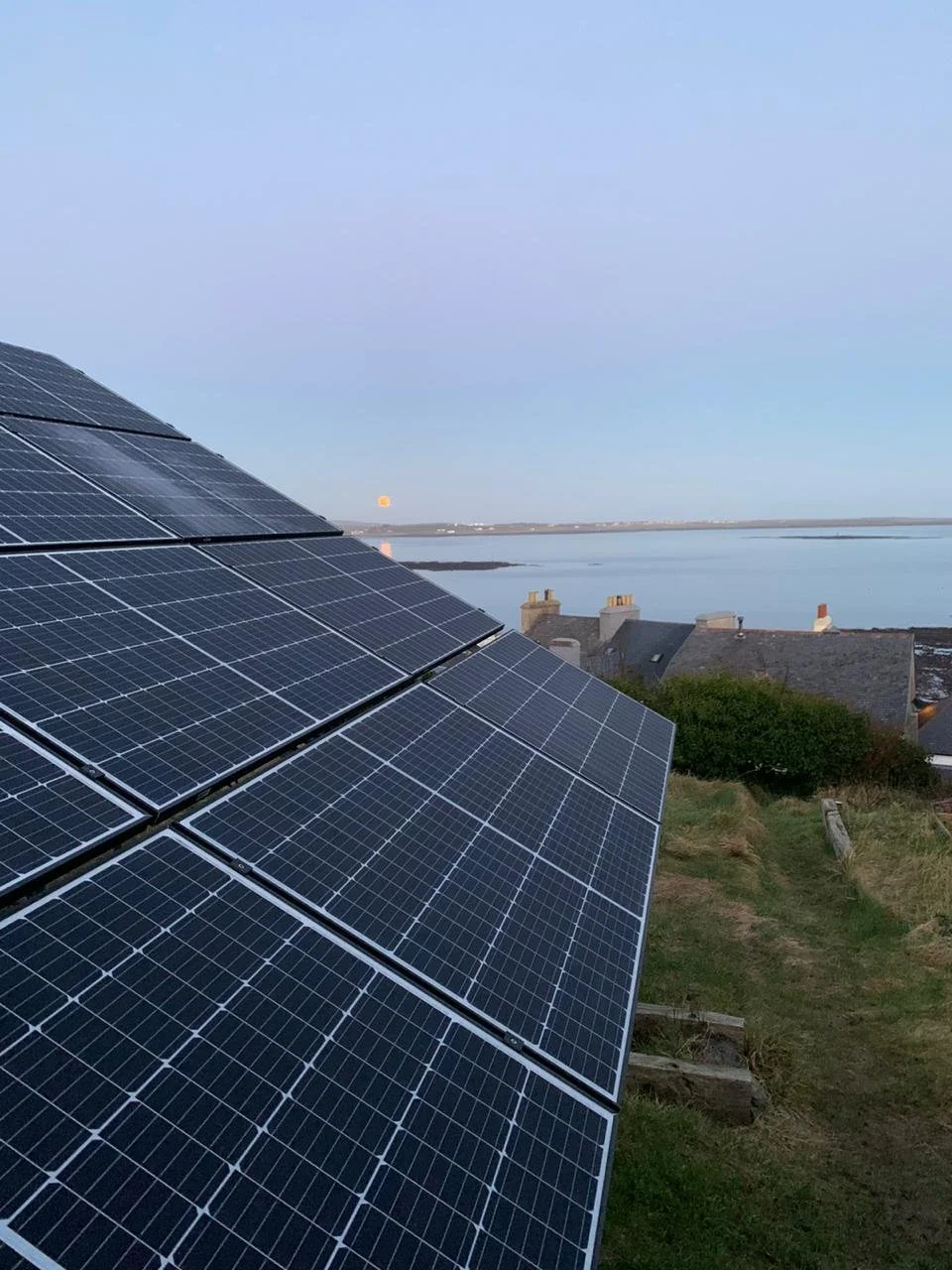
With 2026 looking to be in the top 5 hottest years on record, Tynwald recently voted in favour of adopting the Isle of Man Government’s progress report of the achievement of the aims of the Government’s Climate Change Plan 2022-2027 (see) (“the Update”), identifying serious failures in achieving the objectives of the Climate Change Plan.
In regards to the installation of renewable energy in the Isle of Man, the Update indicated that: -
Whilst the target in the Climate Change Plan 2022-2027 to install 20MW of renewables is described as “in progress”, it is separately stated that “most infrastructure is not yet built” rendering that it has effectively failed to be achieved; and,
The 2030 Government policy target of 100% electricity from carbon neutral sources is at risk of not being achieved (“the 2030 Electricity Target”).
In the Climate Change Plan 2022-2027, the 2030 Electricity Target is indicated as forming 25% of the achievement of the legally binding obligation to reduce Isle of Man greenhouse gas emissions by 35% (from a 2018 baseline).
The Green Party is concerned that the Government is already far off track to achieve the installation of renewable energy in the Isle of Man and we have written (see) to the Chief Officer and to the Minister of the Department of Environment, Food and Agriculture request responses to the following matters: -
“1.1.1. How the Department of Environment Food and Agriculture (“the Department”) are holding Manx Utilities accountable for the effective failure of the 2026 Renewables Target?
1.1.2. How is the Department now proposing to recover the lost progress to achieve the 2030 Electricity Target?
1.1.3. Orsted has stated of their Mooir Vannin wind farm proposal, that “Up to 100MW could also be supplied to the Isle of Man to help meet the Island’s net zero and energy security goals.” What has the Department done to engage with Orsted as to their proposal and when will it publicly respond to it?
1.1.4. What is the most recent figure of the share of electricity generation from renewable energy sources in the Isle of Man that the Department holds?”
The Isle of Man is suffering the direct impact of climate change, as explained in the Ronaldsway Meteorological Office’s ‘Annual Observations Report’ (January 2026) (see), including droughts and floods impacting the farming community, increasing coastal overtopping and flooding impacting coastal communities, and storm damage, with over £1 million having being dedicated in relation to damage caused by storms Darrah and Eowyn in 2024 and 2025.
Further, our reliance on fossil fuels (with the most recent figures from December 2024 indicating c.82% of electricity coming from burning gas at Pulrose) exposes us to highly expensive and volatile fossil fuels (as shown by the war in Ukraine and the conflict in the Strait of Hormuz.
The alternative to this expensive and volatile fossil fuel system is using our natural resources in the Isle of Man. While solar power prices have dropped 90% (see), onshore wind is now the cheapest form of electricity generation (see).